Gum arabic has a long history of traditional use across Middle Eastern, North African, and Asian herbal medicine, historically valued as a soothing, binding agent. Today it's recognised primarily as a natural dietary fibre rather than a medicine — here's the history, and what actually holds up under modern science.
A brief history of gum arabic in traditional medicine
Gum arabic's story as a traditional remedy goes back centuries before it became a packaged wellness product.
Ancient Middle Eastern and North African origins
Harvested from Acacia trees across the Middle East and North Africa, gum arabic has documented use going back to ancient Egyptian and Arab herbal traditions, where it was valued for its soothing texture and binding properties in traditional remedies.
Its place in Malay traditional herbal practice
Gum arabic itself arrived in the Malay Archipelago as a traded ingredient rather than a native one, but it found a natural place within perubatan tradisional Melayu (traditional Malay medicine), which has its own long history of using plant gums, resins, and mucilage-rich ingredients for similar soothing and binding roles in traditional preparations.
Traditional uses across cultures
Soothing the throat
Traditionally dissolved in water as a soothing drink for throat discomfort.
Digestive comfort
Used traditionally to settle the stomach, long before its fibre content was scientifically understood.
Traditional wound care
Historically used as a binding agent in some traditional topical preparations.
Traditional cosmetic use
Featured in some historical skin preparations for its binding, smoothing texture.
Binding agent in remedies
Used to hold other herbal ingredients together in traditional pastes and mixtures.
Modern dietary fibre
Today, its best-supported role is as a natural soluble prebiotic fibre in the daily diet.
What modern science actually supports
Historical use isn't the same as proven benefit
Many traditional uses listed above are historical and cultural in nature, not clinically proven medical treatments. What's actually well-supported by modern research is gum arabic's role as a soluble prebiotic fibre — this is a separate, better-established benefit from its older traditional-medicine reputation, and it's the reason it is sold as a daily fibre drink today.
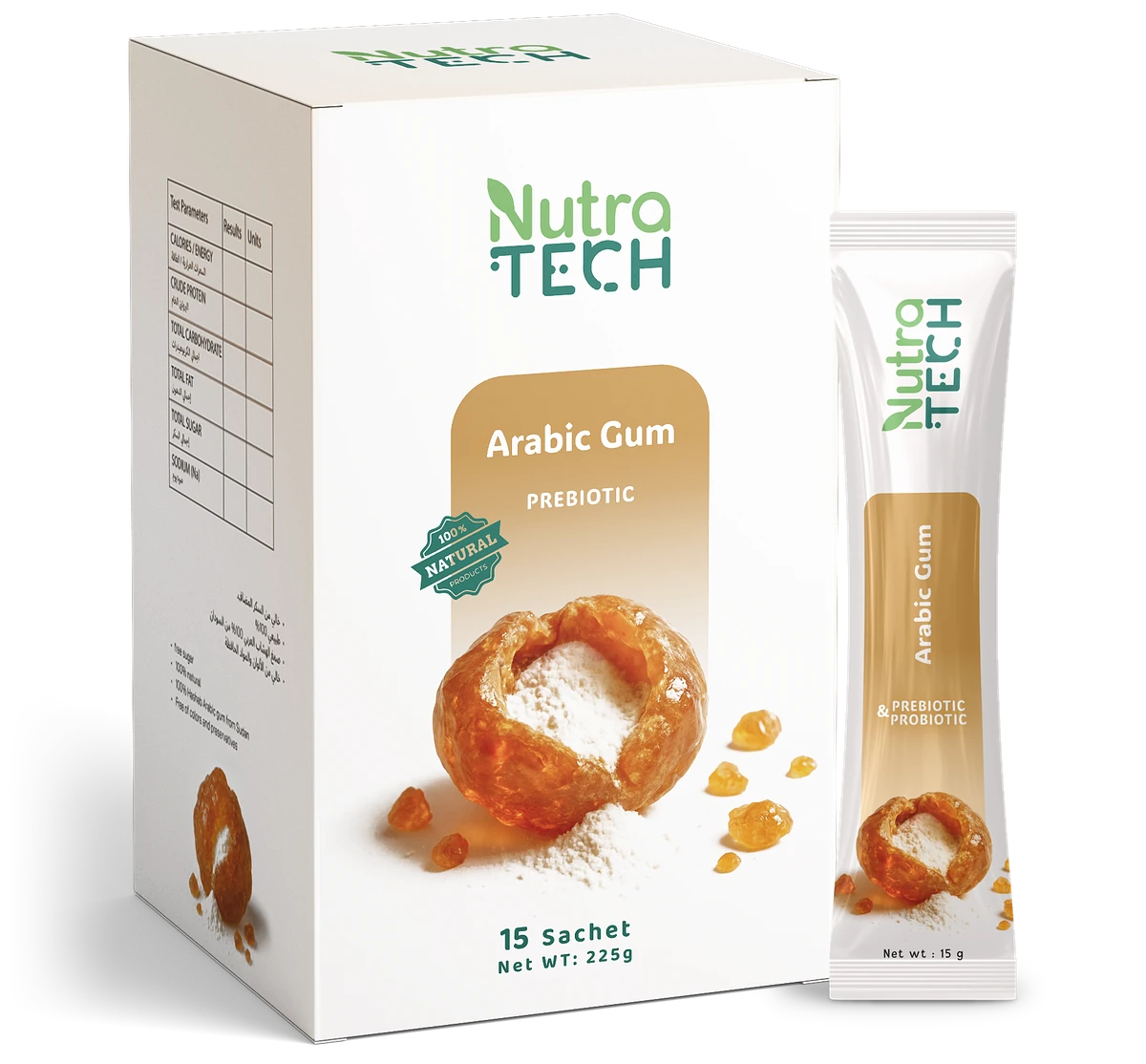
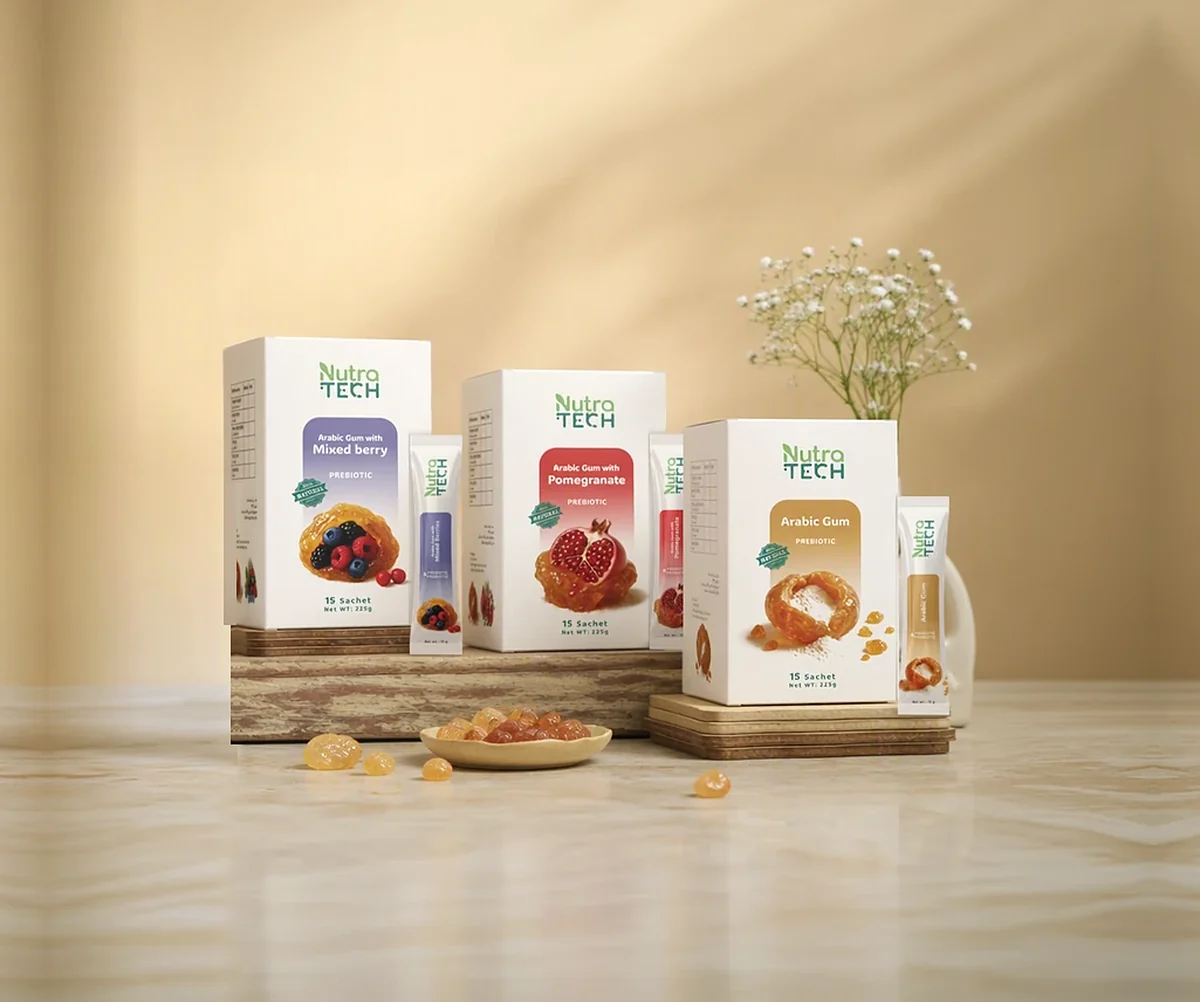
How NutraTech PrePro+ fits into this history today
NutraTech PrePro+ is formulated and sold as a daily dietary supplement — not as a medicine or treatment for any condition. If you're curious about its digestive-health role specifically, see our guides on constipation and general benefits and dosage.
Try It as a Daily Fibre Drink
Shop NutraTech PrePro+ for today's wellness routine.
History explains why gum arabic earned a place in the kitchen cabinet — modern science explains why it still belongs there.